Many cooking terms are used in cookbooks and recipes without any explanation. I know I found this frustrating when I first started to work from recipes. I thought I would try to cover some of them here for quick reference. I'll keep adding new ones as they rear their ugly heads. Some of these terms might seem obvious to you and I but they won't necessarily to everyone.
A |
B |
C |
D |
E |
F |
G |
H |
I |
J |
K |
L |
M |
N |
O |
P |
Q |
R |
S |
Spices |
T |
U |
V |
W |
XYZà la King: served with a white sauce that typically includes mushrooms, green peppers and pimentos.
à la mode: typically means served with a scoop of ice cream but I have also heard it used in reference to meat served with a scoop of mashed potatoes.
antipasto: Italian equivalent of hors d'oeuvres. Served as a first course and is usually an assortment of appetizers such as pickled fish, olives, peppers, mushrooms and preserved meats.
arrowroot: thickening agent similar to cornstarch. Usually used in desserts.
au Gratin: baked with a topping of toasted bread crumbs and/or grated cheese.
au Natural: you guessed it, served in the raw (or plainly cooked).
baking: cooking with indirect heat, usually in an oven.
barbecue: roasting over direct flame or under direct heat (similar to broiling) while basting with a well seasoned sauce.
basting: the act of moistening cooking food with water, juice, drippings or sauce while it cooks in order to prevent the food from drying out.
bisque/bisk (soup): thick cream soup, usually containing seafood.
blending: thoroughly mixing two or more ingredients together.
boiling: process of cooking food in water at 212°F (100°C).
borscht (soup): a Russian stew/soup made with beets, tomatoes, cabbage and meat.
bouillabaisse (soup): a stew/soup made with a mixture of fish and shellfish, tomatoes, garlic, saffron and fennel.
bouillon - beef broth made by simmering beef and beef bones. Also available in a variety of dried forms (powders, cubes). Sometimes used to describe other broths or dried 'cubes' made from chicken or vegetables.
bouquet garni (french): a mixture of herbs tied together, usually in cheesecloth, and used to flavour soups and sauces. The bouquet garni is removed before serving.
braise: to brown meat, fish or vegetables in a small amount of fat. Typically you then add some liquid and cook covered on the range or in the oven.
braising: cooking slowly in a small amount of liquid.
brochette: cooking with a skewer, this typically includes meat, vegetables, mushrooms or seafood on a wooden or metal rod and cooking with direct heat. Also referred to as a shishkabob or kabob.
broiling: cooking by exposing food to intense direct heat. This could include a broiler unit (electric element typically above food in an oven) or hot coals/charcoal. Can also mean using a pan on the stove top but using little or no liquid in the pan.
brown sauce: fat (butter, oil, drippings, etc.) is allowed to brown before adding the flour to make a roux (used for thickening sauces and gravy). The flavour will vary depending on the fat used.
candied / candying: cooking fruit in heavy syrup until transparent, then draining and drying. Often used to decorate pastry or other dishes.
capsaicin: a chemical compound found in peppers that is perceived as heat by your mouth and tongue (or any delicate tissue including your eyes and nose).
chowder (soup): a soup, usually cream-based, that may contain foods such as potatoes, salt pork, fish, corn and a long list of other possible ingredients. Chowder is often used to refer to a cream-based soup although not all cream-based soups are actually chowders.
chutney: a sweet and highly-seasoned relish made from chopped fruits and/or vegetables. Often served with hot or cold meats, stews, sausages and curries.
citron: similar to a lemon or lime but larger and less acidic.
condensed milk: milk that has been condensed (water removed) and had sugar added. Will last for a long time without refrigeration. Used in various desserts.
condiment: a sauce, relish or spice used to enhance the flavour of food. Typically used on prepared food rather than in the cooking process. (eg: ketchup, mustard, chutney, hot sauce).
consommé: a clear broth, typically beef based.
convection oven: this type of cooking oven uses a fan to force the hot air to move around thus encouraging faster and more even cooking.
Cordon Bleu: famous french cooking school. Cordon Bleu is used in the name of many dishes that originated there.
crème fraîche: similar to sour cream but with 28% butterfat. Goes well with fresh fruit, desserts and chilled soups. It is thicker but less sour than sour cream. It can be made at home by adding a small amount of cultured buttermilk or sour cream to heavy cream, and allowing it to stand for several hours at room temperature.
creaming: working together of two or more ingredients until soft and creamy.
crouton: dried, often fried cubes of bread added to soups and salads.
curries: stews seasoned with curry powder. Originally from India.
deviled: highly seasoned mixture of chopped or ground ingredients. (eg: deviled eggs).
dotting: to put small patches of butter on top of food before broiling or baking.
dredging: coating food with flour or bread crumbs.
dress: to clean or trim meat before cooking.
drippings: the fat and/or juice that drips from meat while cooking. Used for basting and as a base for gravies.
dunking: dipping food into a liquid. Sometimes as a preparation for dredging.
dusting: to sprinkle with flour or fine sugar.
Dutch oven: thick walled cooking pot with a tight fitting lid. Usually deep enough to prepare a roast, small chicken or large stew.
egg noodle: a noodle in which eggs have been added to flour and water.
en casserole: food served in the same dish in which it was prepared.
entrée: the main course. Originally referred to dishes served between heavy courses.
essential oil: oils extracted from plants. Commonly used for flavouring.
étouffée: pronounced é-too-fay. A process of braising pork, poultry or seafood and then smothering the meat in aromatic vegetables. The pot is then covered and the food continues to cook until the flavours of the vegetables are transferred to the meat.
evaporated milk: milk that has been condensed (water removed) without the addition of sugar. The canned milk has an extended shelf life and does not require refrigeration until opened. May, sometimes, be substituted for cream. Used primarily in desserts and baking.
farina: the coarsely ground inner portion of hard Spring Wheat. Used for hot breakfast food like Cream of Wheat.
Figaro sauce: sauce made of tomato purée, mayonnaise (or Hollandaise sauce) and parsley. Usually served with fish.
flambé: a dish, meat or dessert, is moistened with spirits and set, briefly, aflame. Typically the flame will burn itself out but a lid can be placed over the dish to extinguish it. Be sure to have a fire extinguisher on hand if you plan to try this.
Fleurette sauce: sauce made of butter, chopped chives, lemon juice, cayenne and mayonnaise. Also refers to Hollandaise sauce mixed with crème fraîche.
Florentine: term for dishes that include spinach as a main ingredient.
foie gras: fatted goose liver served as a spreadable paste.
folding in: a method of blending ingredients that involves very little and very gentle mixing. Commonly used for light and fluffy ingredients.
fondue: melting until pourable. Usually refers to cheese or chocolate. Fondue can also mean a container of heated oil into which you place speared food to cook.
fricassée: meat cut into pieces, stewed and served with white sauce.
frizzling: cooking in a small amount of fat until crisp.
frying: cooking in fat on top of range at a temperature of 400°F. Deep frying involves a deeper container filled with hot fat into which a metal basket lowers food for cooking.
game: refers to wild birds used for food. This includes ducks, geese, partridge, quail and pheasant.
garnish / garni: to embellish or adorn a dish with edible elements to make it more attractive.
gazpacho (soup): source of a famous Red Dwarf episode. Gazpacho is actually a pureed mixture of vegetables such as tomato, cucumber and onion. It is sometimes thickened with bread and can occasionally contain fruit or berries. Gazpacho is always served cold.
grating: shredding (turning into very small pieces) using a device covered with small scoop shaped blades. These "graters" come in a variety of shapes and sizes and produce a broad range of shredded food. Different graters are used on spices, cheeses, vegetables, fruit or the rind of various citrus. Most food processors come with grating attachments.
gravy: a sauce made from the juices and drippings of fried or roasted meat, usually thickened with flour or cornstarch.
grilling: see broiling.
gumbo (soup): a thick soup/stew from Louisiana. Gumbo is thickened with either okra or ground sassafras root (filé powder). Other ingredients can include a strong stock, celery, bell peppers, onion as well as meat (poultry, sausage or smoked pork) or shellfish (shrimp/prawn, scallops or oysters). Gumbo is usually served over rice.
herb: a plant whose stem does not produce woody, persistent tissue and generally dies back at the end of each growing season. Commonly used for medicinal purposes or for flavouring food. See also spices.
Hollandaise sauce: an emulsion of butter and lemon juice or vinegar combined with egg yolks, thickened over boiling water while stirring constantly. Usually seasoned with salt and a little white pepper or cayenne pepper.
hors d'oeuvres / canapé: small appetizers served before a meal. See also antipasto.
hot sauce: numerous brands of hot sauce are available today. Almost all are made from a combination of peppers, vinegar and salt. Some add other ingredients to alter the taste or vary the proportions of peppers to vinegar, for the same reason. Hot sauce is a handy way to add a little heat to a dish. Many people use hot sauce as a condiment.
infusion: a liquid obtained by steeping a food until the flavour is extracted.
jambalaya: this New Orleans stew is similar to a pilaf and is usually made up of a combination of rice, broth, pork, ham, sausage, chicken, shrimp, onion, bell pepper, garlic, tomato and a variety of herbs including cayenne.
julienne: cutting vegetables, meats or fruit into long thin strips.
kabob: see brochette.
kneading: to mix or work dough into a plastic mass by folding it over, pressing and squeezing, usually with the hands.
kosher: food prepared and served according to Jewish dietary laws.
leeks: mild form of onion with broad, long leaves/stalks. Used for seasoning in soups and stews.
Lyonnaise sauce: brown sauce with minced onions, herbs and white wine.
marinade: mixture of vinegar, wine, spices, etc. used for fish, meat and salads. When used with meat/fish it is often intended to both flavour and tenderize.
mayonnaise: creamy salad dressing made of olive oil (or corn oil), egg yolks, lemon juice or vinegar and seasoning, beaten together until smooth. Sometimes dry mustard or other ingredients can be added. Often used as the base for other dressings and sauces.
measurements: units of weight or volume used to portion out ingredients. Typical volume measurements include, teaspoon (tsp), tablespoon (tbsp), ounce (oz), cup (c), pint, quart , gallon. Others, such as a pinch or a dash or more vague. Measures of weight include primarily ounces (not the same as the liquid measure) and pounds (lb).
Here are some basic equivalents.
3 tsp = 1 tbsp
16 tbsp = 1 c.
2 c. = 1 pint
4 c. = 1 quart
4 quarts = 1 gallon
16 ounces = 1 pound
metric measurements: this system of measure is more common in Europe and becoming more and more common in Canada. Units include the litre (volume), gram (weight) and meter (distance).
Basic Conversions for Volume1mL = just under ¼ tsp
(0.2 tsp)2mL = just under ½ tsp
(0.41 tsp)5mL = 1 teaspoon
15mL = 1 tablespoon
50mL = ¼ cup minus 2 tsp
(0.21 cups) 250mL = 1 cup plus 1 tbsp
(1.06 cups)500mL = 1 pint plus 2 tbsp
(2.11 cups) 1L = 1 quart plus ¼ cup
(1.06 quarts)Basic Conversions for Weight
30 g = just over 1 ounce
(1.06 ounces)250 g = just over ½ lb
(0.55 lbs)1 kg = 2 lbs plus 3½ ounces
(2.2 lbs)Or you can do the math yourself...
1 teaspoon = 4.93 mL
1 tablespoon = 14.79 mL
1 ounces (US, fluid) = 29.57 mL
1 cups (US, liquid) = 0.24 liters
1 pints (US, liquid) = 0.47 liters
1 quarts (US, liquid) = 0.95 liters
1 gallons (US) = 3.79 liters
melting: making a solid into a liquid or fluid by applying heat.
melting point: the temperature at which a solid becomes a liquid. Some foods have a high melting point others have a low one. Over heating some foods can change their quality or taste.
minced / mincing: chopped fine. Similar to grating but with a knife rather than a grater.
minestrone (soup): an Italian soup made with vegetables and beans. Minestrone can also contain seasonal vegetables, pasta, cheese and pesto.
mixing: combining two or more ingredients.
mortise & pestal / mortar & pestal: a mortise is a bowl shaped vessel, usually of stone or ceramic, into which you place the club shaped pestal (usually the same material). It is used to crush and grind ingredients usually into a fine powder or adding liquid to get a paste.
mulligatawny (soup): there are numerous versions of this delicious East Indian soup, but almost all contain curried meat or seafood and are thickened with cream or coconut milk.
Newburg sauce: sherry-flavoured cream sauce thickened with eggs.
noodles: flat strips of dough usually made with flour (wheat, rice, etc.), water and sometimes eggs. Used in numerous dishes and available in many styles and widths including egg noodle, vermicelli, spaghetti, linguine, lasagna, and many more.
oil: liquid fats derived from various seeds, grains, fruit (olive) and vegetables. Many commercial oils (vegetable, sunflower, corn, safflower) are created through a chemical process which helps to extend their shelf-life. Others, like olive oil, are extracted using a press.
onion: member of the lily family with edible stalks and roots. Onion can be sliced, chopped, minced, dried, fried, or eaten raw. Used to season soups, stews, fried and broiled foods. When an onion is cut it releases a gas that combines with the tears in our eyes and turns into sulfuric acid causing the eye to become irritated and thus produce more tears in an attempt to flush the eye. A cold onion will produce less gas and thus cause less tearing.
paella: fabulous dish that is cooked in a special flat bottomed pan. Paella, originally from Spain, can contain rice, chicken, rabbit, beans, snails, fish (including octopus or squid), shellfish, pork, sausage and a variety of vegetables. Nearly all paella recipes call for saffron.
parboiling: boiling food until is is partially cooked, often as a step in the final preparation of a dish.
parching: to dry with heat such as in a dry frying pan. Some spices can have their flavour enhanced by parching before use.
pare / paring: to cut or trim off the rind, peel or skin from fruits or vegetables. In most cases the skin/peel is discarded but in some cases, like with a lemon, you actually pare the edible part of the rind and use it in cooking.
pastry: dough made by blending flour, water and shortening (fat). Used to create shells or casings for a variety of dishes, both main course and desserts
pectin: water-soluble compound obtained from certain fruits. Pectin is used in the creation of jellies, jams and other preserves.
peeling: removing the outer skin of fruits and vegetables as a step in the preparation of food.
pimento: the red fruit of the common garden or sweet Italian pepper is cooked and canned. The soft red 'meat' is used for decoration and flavouring. Most people are familiar with the pimento as a stuffing for green olives. Rated between 100 - 500 on the Scoville scale.
pine nut: small, smooth, sweet nuts from the pinecones of some conifers. Used frequently in Italian cooking.
piquant: refers to the hot, spicy, pungent or stimulating flavour of food.
poaching: the process of cooking food (eggs, fish, etc.) in slowly boiling water. This technique is used to prevent overcooking.
poultry: refers to all domestic birds used for food. This would include chicken, turkey, squab, pigeon, geese and duck.
pressure cooking: special pots are used to cook food using steam under pressure. These pots are sealed and can reach up to 30lbs of pressure which increases the heat and can decrease cooking time.
preserves: sweet medley of fruit cooked in heavy syrup. Typically this is 'canned' so that it will last for long periods allowing access to fruit during the non-growing season.
ragout: thick savory stew.
ramekins: shallow china dishes that can be used to bake and serve a variety of foods.
relish: chopped vegetables that have been well seasoned and pickled. Served as a condiment. Also see chutney.
roasting: cooking in the oven with little or no moisture. Roasting will often result in a combination of rare, medium and well done meat in the same roast.
rotisserie: broiling food while it rotates on a spit (metal rod that passes through the food). This process cooks very evenly.
roux (french): means "brown". A roux is a thick sauce or paste made from heating fat (oil, drippings, etc.) and adding flour or some other thickening agent (arrowroot, cornstarch, etc.) and cooking the elements together. Usually the fat is added to a hot pan until it is almost smoking, then the thickening agent is added bit by bit while the roux is being stirred. Eventually this will create a brown paste. The roux is then used to thicken gravies, sauces and other liquids. I personally like to use butter and white flour for my roux.
sauté: to cook in a small amount of fat, significantly less then when frying (typically a tablespoonful of fat, butter or oil).
scalding: to heat to a temperature just below boiling. Scalding is usually used when heating milk or cream as this prevents it from curdling or burning.
scallions: young green onion stalks, larger than chives.
scalloping: creamed food in a casserole (eg: scalloped potatoes).
scallops: a tender, sweet shellfish.
scoring: cutting through the surface of a pie crust, vegetable or meat (especially ham) before baking.
Scoville scale: a rating system for the heat of peppers based on the amount of capsaicin it contains. Peppers can range from 0 units (Bell pepper) to 577,000 units (Red Savina habanero). Pure capsaicin can rate as high as 16,000,000 units. Pepper spray clocks in at between 2,000,000 and 5,300,000 units.
semolina: flour or meal (courser than flour) made from the hard kernels of wheat. Used commonly in making pasta.
seviche/ceviche (soup): in this soup fresh raw seafood is marinated in acid such as tomato or lemon, lime or sour orange juice which "cooks" the flesh, removing the raw taste. Most, but not all, recipes call for garlic and hot peppers in some form. Traditionally seviche is served cold.
shallots: onion-like plant with bulbs that taste like mild garlic. Used much like onions.
shishkabob: cooking with a skewer, this typically includes meat, vegetables, mushrooms or seafood on a wooden or metal rod and cooking open direct heat. Also referred to as a kabob or a brochette.
shortening: fat used to make breads, pastry, pies and cakes. Helps to make the dough more tender.
simmering: slow cooking at just below the boiling point (200-212°F. Approx. a quarter turn on most range dials), you will usually see small bubbles around the edge of the pan. I usually consider a medium simmer to range from 100 - 150°F while a low simmer would be under 100°F.
skewering: to fasten meat to a long metal spike or spit in order to broil or barbecue.
soupcon: a very small amount.
soy sauce: a sauce made from the soy bean and salt. Commonly used in Chinese cuisine.
spätzle: little dumplings used to garnish soups or stews. German origin.
spices: aromatic or pungent substances of vegetable origin used as a preservative or for flavouring food.
allspice: ground berry used to season puddings, pies and pickles. Sometimes used in other baking. The taste is somewhat like a mix of cloves, cinnamon, and nutmeg.
------------------------------------------------------------------------------
basil / sweet basil: from the mint family has a peppery but sweet (anise-like) flavour and smell. Basil compliments tomato dishes well. Fresh basil is also one of the main ingredients of pesto.
------------------------------------------------------------------------------
bay leaves: Dried leaves from the sweet bay tree used to flavour meats, soups, sauces and in pickling. The bay leaf has a slightly floral aroma and tasting the leaf directly is rather bitter but no so when used for cooking. The bay leaf is usually removed after cooking.
------------------------------------------------------------------------------
camomile / chamomile: herb from the aster family. Dried flowers are used to make a delicately floral tea infusion. Chamomile is soothing and contains relaxants and is an anti-spasmodic. Those allergic to ragweed should avoid chamomile.
------------------------------------------------------------------------------
capers: green buds from a Mediterranean bush. These small round buds are pickled in brine and used to flavour or garnish food. Available in various sizes. Their taste is similar to that of a green olive but a bit more sour and salty.
------------------------------------------------------------------------------
capsicum: pepper pods that can be used whole, chopped, pickled or dried. Mild capsicum are dried and powdered to make paprika, hot ones are used to make cayenne and chili powder. Flavour and heat vary between types.
------------------------------------------------------------------------------
caraway: small brown crescent shaped seeds used in rye bread and cheese. Caraway is both a little sweet and a little tangy.
------------------------------------------------------------------------------
cardamom: Asian herb of the ginger family. The seeds are used for a variety of dishes and a common ingredient of many curries. It has a slightly citrusy flavour.
------------------------------------------------------------------------------
cassia: herb made from the pod of a tropical plant. Similar in flavour to cinnamon.
------------------------------------------------------------------------------
cayenne pepper: very hot pepper of the capsicum family, dried and ground into a powder. Rated at 30,000 - 50,000 Scoville units. See also capsicum, Scoville scale.
------------------------------------------------------------------------------
celery salt: ground celery seeds combined with table salt.
------------------------------------------------------------------------------
chervil: member of the carrot family. The leaves are used to flavour salads or soups and it has a faint taste of licorice.
------------------------------------------------------------------------------
chili peppers / chili powder: see capsicum, peppers, Scoville scale.
------------------------------------------------------------------------------
chives: member of the onion family. The long, slender, hollow stems (or leaves) are chopped and used to flavour soups, stews, vegetables and salads. They have a subtle onion flavour.
------------------------------------------------------------------------------
cinnamon: aromatic inner bark from a tree/shrub of the laurel family. Use whole or ground for pickling, spices drinks and in many types of dessert or cooked grains. Cinnamon has little flavour but its aroma is very strong - sweet and woody.
------------------------------------------------------------------------------
cloves: pungent and fragrant spice with a slightly sweet flavour, made from the dried bud of an evergreen tree native to East Indies. Used for pickling, baking and for studding a roasted ham.
------------------------------------------------------------------------------
coriander: seed from a member of the carrot family (Cilantro). Used to flavour foods such as curries and sausages as well as beverages. Taste is similar to a blend of lemon and sage.
------------------------------------------------------------------------------
cilantro: leaves from a member of the carrot family. Cilantro has a very pungent flavour with hints of citrus and parsley. Caution, to some people it tastes like soap... I have no idea why.
------------------------------------------------------------------------------
cress / cresson / watercress: plant of the mustard family. The green leaves are used in salads, sandwiches and garnishes. Young leaves are preferred and have a mild peppery taste.
------------------------------------------------------------------------------
cumin / cummin: from a small, hollow stemmed plant. The seeds are used for seasoning, primarily in curries. The taste is slightly bitter.
------------------------------------------------------------------------------
curry powder: blend of crushed or ground spices and seeds used to flavour soups and stews. Typically contains cardamom, turmeric, fenugreek, cumin and chillies, but can also include ginger, cloves, nutmeg, coriander, mustard, garlic, fennel, and black pepper.
------------------------------------------------------------------------------
dill: herb of the carrot family. Leaves used for pickling, soups, salmon and salads. Seeds used for pickling. Sometimes used to add flavour to rice, mashed potatoes or other side dishes. The flavour is similar to caraway but more mellow.
------------------------------------------------------------------------------
fennel: vegetable that looks similar to celery but with a bulbous base. Tastes slightly of anise (licorice). Good raw or cooked.
------------------------------------------------------------------------------
fennel seed: used to flavour breads, pastries, fruit pies, sausages, meat balls, sauces and condiments.
------------------------------------------------------------------------------
filé: also called gumbo filé, is a spice made from dried and ground sassafras leaves. It is used in the making of gumbo, a Creole and Cajun soup/stew both for flavour and as a thickening agent. The taste is similar to a mix of thyme and savory. The roots and bark of the sassafras tree used to be use to make root beer (just added that because I love root beer).
------------------------------------------------------------------------------
garlic: member of the onion family the garlic clove has a very distinctive odour and flavour, similar to onion but fuller. Roasted garlic becomes very sweet. Garlic can be chopped, minced, fried, roasted and can be used in pickling. I've even had a garlic ice cream that was wonderful. What can't you do with garlic?
------------------------------------------------------------------------------
ginger: the root of a tropical herb plant from East Indies, Africa and China. Used for many dishes the root can be sliced, chopped, ground or dried and powdered. The aroma is sweet and woody while the flavour has a bit of bite.
------------------------------------------------------------------------------
lovage: celery-like herb of the carrot family used for flavouring salads, soups, stews, meats, etc. Similar taste to celery.
------------------------------------------------------------------------------
mace: the outer covering of the nutmeg, dried and ground and used for flavouring. Similar to but milder then nutmeg itself.
------------------------------------------------------------------------------
marjoram: fragrant herb of the mint family used to flavour food. Used with meats, soups, stews, etc. Flavour is similar to oregano but more citrusy.
------------------------------------------------------------------------------
nutmeg: hard aromatic kernal of an East Indian nut. Ground or grated for eggnogs, puddings, custards and baking. The taste is distinctive with earthy, nutty qualities.
------------------------------------------------------------------------------
oregano: from the mint family oregano is often used in tomato sauces, fried vegetables, and grilled meat. The flavour is peppery and tends to be stronger in the dried version.
------------------------------------------------------------------------------
paprika: a mild spice derived from the fruit of a capsicum plant. Usually used to add colour to a dish but also has a very subtle flavour. The heat in sweet paprika is around 500 Scoville units while Hungarian paprika can reach 8,000 units. See also capsicum, Scoville scale.
------------------------------------------------------------------------------
parsley: this herb is used primarily for garnishing but can also add a subtle flavour to some dishes.
------------------------------------------------------------------------------
pepper/peppercorns: the dried berries of the capsicum plant are ground and used to flavour many types of food. Pepper can be obtained in black, white and red peppercorns. Pepper has a hot, pungent flavour and aroma. Works well on most foods.
------------------------------------------------------------------------------
peppermint: a member of the mint family this herb is usually used fresh. The leaves are used in beverages, as decoration and in a variety of fruit dishes. Mint is also used to make mint sauce and mint jelly, both of which go well with lamb. The flavour is tangy and sweet.
------------------------------------------------------------------------------
peppers: a wide variety of fruit pods from the capsicum family. The size, colour and flavour varies dramatically from one type of plant to another. The 'heat' of peppers is rated using the Scoville scale which ranges from mild (bell pepper at 0 units) to very hot (Scotch bonnet or Habanero at 100,000 - 325,000 units). Peppers are used in many dishes both for flavour and as decoration. They can be roasted, dried, chopped, diced or ground. They can be eaten raw, pickled or cooked. See also capsicum, Scoville scale.
------------------------------------------------------------------------------
poultry seasoning: a combination of spices used to flavour poultry. Usually contains sage, thyme, pepper, marjoram and sometimes cloves.
------------------------------------------------------------------------------
rosemary: this herb is grown on a small evergreen shrub. It has a pleasant aroma and pungent flavour. Can be used with many dishes but goes very well with meats. It can be used to flavour oils and vinegars and works well with most other spices.
------------------------------------------------------------------------------
saffron: a yellowish orange seasoning made from the dried stigma of the purple crocus. Very expensive. Used primarily to colour dishes. Very subtle and slightly bitter flavour.
------------------------------------------------------------------------------
sage: from the mint family. The dried leaves are used for poultry, meat, soups and stews. Fairly aromatic with a slightly peppery flavour.
------------------------------------------------------------------------------
salt: a mineral used for seasoning. Salt tends to enhance the existing flavours in food and also works as a preservative (which is why so many prepackaged foods are so high in sodium). Most table salts are iodized, meaning they have iodine added. Iodine is something our thyroid needs to function properly. If the salt does not say iodized it has not been added, which is fairly common in sea salt or rock salt found in health food stores. Salt is used on most food and often, along with pepper, is sprinkled directly on individual portions by the person eating.
------------------------------------------------------------------------------
savory: from the mint family, savory is usually used to flavour meats, soups and stews. The summer savory has a peppery taste while the winter savory has a more piney taste. Savory blends well with other herbs such as basil, bay leaf, marjoram, thyme and rosemary.
------------------------------------------------------------------------------
tarragon: from the aster family, the leaves are used for salads, chicken, fish, eggs and some pastas (lasagna). It smells grassy but has a distinctive, bittersweet taste with a hint of anise.
------------------------------------------------------------------------------
thyme: from the mint family, thyme is used for meat, poultry, stuffing, soups and stews. Thyme compliments lemon especially well. The flavour is slightly minty.
------------------------------------------------------------------------------
turmeric: the root of this East Indian plant is ground and used primarily to colour (yellow/orange) dishes, especially rice, cous-cous, stews and curries. It also has an earthy flavour and aroma with hints of both pepper and ginger.
Note: the taste of herbs and spices are subjective. Be warned, some may taste differently to you then they do to me.spit: pointed rod used to hold meat or poultry in front of or over a fire. Usually it is rotated to ensure even cooking. See also skewer.
steaming: cooking with steam. The steam usually rises from a reservoir of boiling water and passes over the food as it moves upward, often trap within a pot by the lid. Vegetables are especially good steamed. See also pressure cooker.
steeping: to soak in a liquid maintained below the boiling point (200-212°F) in order to extract the colour and flavour of the steeping food.
sterilizing: killing bacteria with heat, typically above the boiling point.
stock: the liquid in which meat, poultry, fish or vegetables have been boiled. Commercial bouillon cubes are made from stock but processed to remove all the water.
Tabasco®: a specific brand of hot sauce made from peppers, vinegar and salt.
toasting: application of direct heat or flame until the surface of the food turns brown. Yes, like bread becomes toast.
velouté sauce: a sauce made from butter, flour, stock (chicken, beef, vegetable), salt and pepper (often white pepper). Often used as the base for other sauces.
vichyssoise (soup): a classic French soup made with potatoes, leeks, stock and heavy cream. The soup is typically pureed until smooth and served chilled.
vinegar: a sour liquid made by fermenting cider, wine or malt. It is both a condiment and a preservative. Used extensively in cooking and in salad dressings.
whipping: beating the ingredients rapidly to increase the volume by adding air. (eg: whipped cream).
white sauce: a sauce made by combining fat, flour and seasonings with milk or cream. Often used as the base for other sauces.
Worcestershire sauce®: a specific brand of sauce used to flavour meats, casseroles and stews. Often used at the table as a condiment.
yeast: a micro-organism that consumes sugar and converts it into alcohol and carbon dioxide (fermentation). Baker's yeast is inactive until exposed to water. The production of carbon dioxide, in bread for example, causes the dough to 'rise' or increase in volume. Salt is often used to limit the yeast's production of carbon dioxide. Yeast is used in the making of bread, beer and wine.
That's all for now but if you find a cooking term that you don't recognize leave a post, I'll see what I can find out.

 Indgredients
 roccoli stems and keep them in the fridge using a sealed container (anytime you prepare broccoli for meals). You can keep stems for 2-3 weeks this way until you have at least 600 grams (approx. 2 cups). If you have more that is fine, it will simply give you a thicker soup. Chop into small pieces.
 Meanwhile prepare the leek. All leeks have dirt in them, it's just a fact of life. I find the easiest way to clean them is to cut the leek near the middle, then peel back the upper green shoots and wash them individually. Then take the lower half, remove the roots and cut the remaining piece into two halfs. Then split these halves down the middle so you can see the edges. Run water from the tap and hold a section under the tap and "flip" through the layers like playing cards (see photo). Turn the piece over and do the same with the other end. Repeat with the other three pieces. Now you can mince the leek.
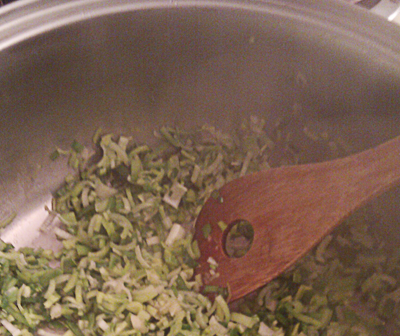 Add butter and olive oil to the large pot and heat. Add the leeks, garlic and celery and cook, stirring occasionally, about 5 minutes. Then set aside.
 The steamed broccoli can be put into the food processor (about 1 cup at a time) along with the water used for steaming (the water will be green, but that's a good thing, it contains all the nutritional elements lost in the steaming process). Process on low for 30 seconds, then add half the leek/garlic/celery mix and process on high for about 1 ½ - 2 minutes. Add a little chicken broth during the processing. Put the the results into the large pot. Repeat with the other half.
 Add the remaining chicken broth and the other 1 - 1 ½ cups water. Bring to a boil and then simmer on medium low. Add the thyme and cumin. Continue to simmer for about 1 hour, uncovered. The soup may look watery at first but simmering will start to thicken the soup.
 Add salt and pepper to taste and serve. If you want you can garnish with a little shredded cheese (chedder or colby are great) or a teaspoon of sour cream. If you like broccoli florets try steaming a few and add them as a garnish.
 Note: You can substitute a reduced sodium or fat free chicken broth if desired.


